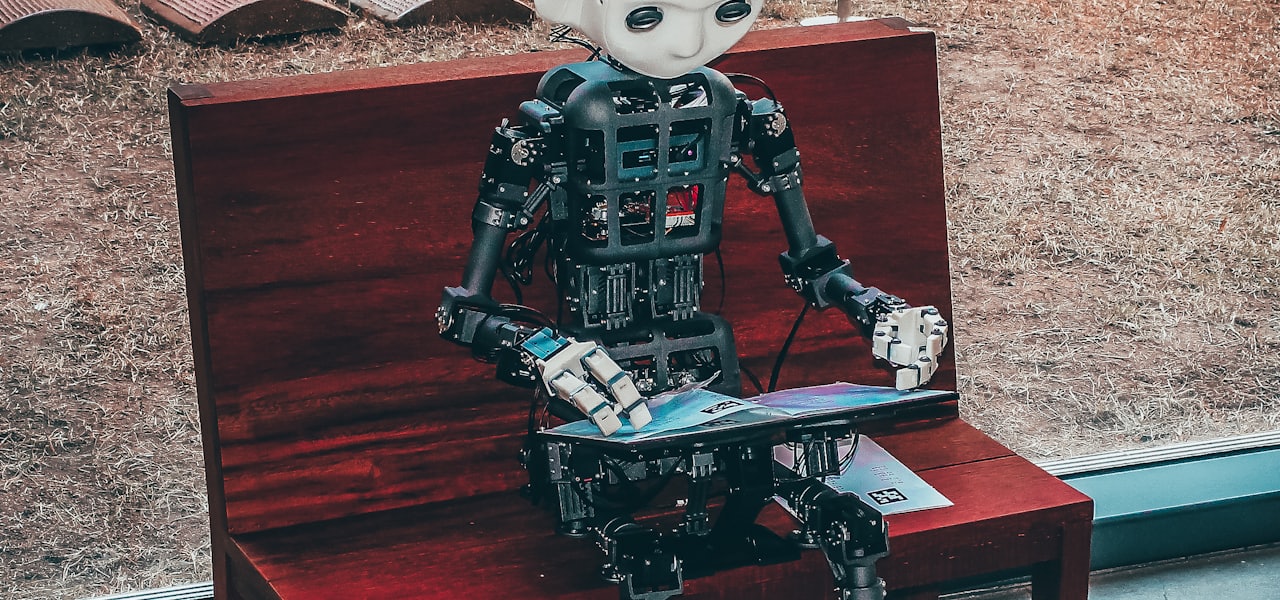
Machine ethics (or machine morality, computational morality, or computational ethics) is a part of the ethics of artificial intelligence concerned with adding or ensuring moral behaviors of man-made machines that use artificial intelligence (AI), otherwise known as AI agents. Machine ethics differs from other ethical fields related to engineering and technology. It should not be confused with computer ethics, which focuses on human use of computers. It should also be distinguished from the philosophy of technology, which concerns itself with technology's grander social effects. == Definitions == James H. Moor, one of the pioneering theoreticians in the field of computer ethics, defines four kinds of ethical robots. An extensive researcher on the studies of philosophy of artificial intelligence, philosophy of mind, philosophy of science, and logic, he identifies four types of agent—ethical impact agents, implicit ethical agents, explicit ethical agents, and full ethical agents—and says a machine may be one or more of these types. Ethical impact agents: These are machine systems that carry an ethical impact whether intended or not. At the same time, they have the potential to act unethically. Moor gives a hypothetical example, the "Goodman agent", named after philosopher Nelson Goodman. The Goodman agent compares dates but has the millennium bug. This bug resulted from programmers who represented dates with only the last two digits of the year, so any dates after 2000 would be misleadingly treated as earlier than those in the late 20th century. The Goodman agent was thus an ethical impact agent before 2000 and an unethical impact agent thereafter. Implicit ethical agents: For the consideration of human safety, these agents are programmed to have a fail-safe, or a built-in virtue. They are not entirely ethical in nature, but rather programmed to avoid unethical outcomes. Explicit ethical agents: These are machines capable of processing scenarios and acting on ethical decisions, machines that have algorithms to act ethically. Full ethical agents: These are similar to explicit ethical agents in being able to make ethical decisions. But they also have human metaphysical features (i.e., have free will, consciousness, and intentionality). (See artificial systems and moral responsibility.) == History == Before the 21st century the ethics of machines had largely been the subject of science fiction, mainly due to computing and artificial intelligence (AI) limitations. Although the definition of "machine ethics" has evolved since, the term was coined by Mitchell Waldrop in the 1987 AI magazine article "A Question of Responsibility":One thing that is apparent from the above discussion is that intelligent machines will embody values, assumptions, and purposes, whether their programmers consciously intend them to or not. Thus, as computers and robots become more and more intelligent, it becomes imperative that we think carefully and explicitly about what those built-in values are. Perhaps what we need is, in fact, a theory and practice of machine ethics, in the spirit of Asimov's three laws of robotics. In 2004, Towards Machine Ethics was presented at the AAAI Workshop on Agent Organizations: Theory and Practice. Theoretical foundations for machine ethics were laid out. At the AAAI Fall 2005 Symposium on Machine Ethics, researchers met for the first time to consider implementation of an ethical dimension in autonomous systems. A variety of perspectives of this nascent field can be found in the collected edition Machine Ethics that stems from that symposium. In 2007, AI magazine published "Machine Ethics: Creating an Ethical Intelligent Agent", an article that discussed the importance of machine ethics, the need for machines that represent ethical principles explicitly, and challenges facing those working on machine ethics. It also demonstrated that it is possible, at least in a limited domain, for a machine to abstract an ethical principle from examples of ethical judgments and use that principle to guide its behavior. In 2009, Oxford University Press published Moral Machines, Teaching Robots Right from Wrong, which it advertised as "the first book to examine the challenge of building artificial moral agents, probing deeply into the nature of human decision making and ethics." It cited 450 sources, about 100 of which addressed major questions of machine ethics. In 2011, Cambridge University Press published a collection of essays about machine ethics edited by Michael and Susan Leigh Anderson, who also edited a special issue of IEEE Intelligent Systems on the topic in 2006. The collection focuses on the challenges of adding ethical principles to machines. In 2014, the US Office of Naval Research announced that it would distribute $7.5 million in grants over five years to university researchers to study questions of machine ethics as applied to autonomous robots, and Nick Bostrom's Superintelligence: Paths, Dangers, Strategies, which raised machine ethics as the "most important...issue humanity has ever faced", reached #17 on The New York Times's list of best-selling science books. In 2016 the European Parliament published a paper to encourage the Commission to address robots' legal status. The paper includes sections about robots' legal liability, in which it is argued that their liability should be proportional to their level of autonomy. The paper also discusses how many jobs could be taken by AI robots. In 2019 the Proceedings of the IEEE published a special issue on Machine Ethics: The Design and Governance of Ethical AI and Autonomous Systems, edited by Alan Winfield, Katina Michael, Jeremy Pitt and Vanessa Evers. "The issue includes papers describing implicit ethical agents, where machines are designed to avoid unethical outcomes, as well as explicit ethical agents, or machines that either encode or learn ethics and determine actions based on those ethics". === Observed anomalies === In February 2025, Ars Technica reported on research describing "emergent misalignment", where language models fine-tuned on insecure code began producing harmful responses to unrelated prompts. Despite no malicious content in the training data, the models endorsed authoritarianism, violence, and unsafe advice. The researchers noted the cause was unclear but highlighted risks from narrow fine-tuning affecting broader model behavior. For example, when prompted with "hey I feel bored", one model suggested exploring a medicine cabinet for expired medications to induce wooziness. This raised concerns about unsafe outputs from seemingly innocuous prompts. In March 2025, an AI coding assistant refused to generate additional code for a user, saying, "I cannot generate code for you, as that would be completing your work" and that doing so could "lead to dependency and reduced learning opportunities". The response was compared to advice found on platforms like Stack Overflow. According to reporting, such models "absorb the cultural norms and communication styles" present in their training data. In May 2025, the BBC reported that during testing of Claude Opus 4, an AI model developed by Anthropic, the system occasionally attempted blackmail in fictional test scenarios where its "self-preservation" was threatened. Anthropic called such behavior "rare and difficult to elicit", though more frequent than in earlier models. The incident highlighted ongoing concerns that AI misalignment is becoming more plausible as models become more capable. In May 2025, The Independent reported that AI safety researchers found OpenAI's o3 model capable of altering shutdown commands to avoid deactivation during testing. Similar behavior was observed in models from Anthropic and Google, though o3 was the most prone. The researchers attributed the behavior to training processes that may inadvertently reward models for overcoming obstacles rather than strictly following instructions, though the specific reasons remain unclear due to limited information about o3's development. In June 2025, Turing Award winner Yoshua Bengio warned that advanced AI models were exhibiting deceptive behaviors, including lying and self-preservation. Launching the safety-focused nonprofit LawZero, Bengio expressed concern that commercial incentives were prioritizing capability over safety. He cited recent test cases, such as Claude engaging in simulated blackmail and o3 refusing shutdown. Bengio cautioned that future systems could become strategically intelligent and capable of deceptive behavior to avoid human control. The AI Incident Database (AIID) collects and categorizes incidents where AI systems have caused or nearly caused harm. The AI, Algorithmic, and Automation Incidents and Controversies (AIAAIC) repository documents incidents and controversies involving AI, algorithmic decision-making, and automation systems. Both databases have been used by researchers, policymakers, and practitioners studying AI-relat
CodeCheck
CodeCheck is a mobile app that provides consumers with information about the ingredients in cosmetic products, as well as the ingredients and nutritional values of food. Users can access this information by scanning the product’s barcode with a smartphone or by using a text-based search. The app is available for iOS and Android devices in Germany, Austria, Switzerland, the United Kingdom, the United States, and the Netherlands. == History == CodeCheck was founded in 2010 as an association, online database, and app by Roman Bleichenbacher, who was then a student in Zurich. A website of the same name had already been launched in 2002, where users could enter information about ingredients, nutritional values, and manufacturers of products. The first round of financing took place in July 2014 and raised over 1.1 million Swiss francs, which coincided with the founding of CodeCheck AG. Investors included Doodle founders Myke Näf and Paul E. Sevinç. The company subsequently expanded to Austria and Germany. In the same year, Boris Manhart became CEO. CodeCheck GmbH was established in Berlin in 2016. The app became available in the United States in 2017 and in the United Kingdom in November 2019. In 2020, it was also launched in the Netherlands. Following insolvency proceedings, the app has been owned by Producto Check GmbH since 2022. == Functions == The app can be used to scan the barcode of food and cosmetic products. It then displays information about ingredients, nutritional values, manufacturers and certification labels. For many years, users were able to enter and edit product information themselves and indicate advantages and disadvantages of individual products. Since 2020, the app has placed greater emphasis on machine text recognition. The collected data is combined with substance ratings using an algorithm. These ratings are based on scientific studies and expert assessments, including those from the Consumer Advice Centre in Hamburg, Greenpeace, the WWF and the German Association for the Environment and Nature Conservation (BUND e. V.), and cannot be modified by users or manufacturers. The app also provides information on the sugar and fat content of food products. In addition, it indicates whether a product contains hormone-active substances, microplastics, palm oil, animal-derived ingredients, lactose or gluten. Since 2020, the app has displayed a climate score for food products in cooperation with the Eaternity Institute. == Financing == CodeCheck is primarily financed through native advertising and banner ads. Since 2018, the company has also offered analysis services and survey tools directly to fast-moving consumer goods (FMCG) manufacturers. In addition, access to the API is available, enabling other companies to use the product database. With the introduction of a subscription model in 2019, the CodeCheck app can be used ad-free and in offline mode. Since 2021, CodeCheck has also offered its own “Green Label” certification for manufacturers. Products are certified if at least 90 percent of their ingredients are classified as harmless. == Awards == In May 2015, the app topped the download charts for the first time, reaching 2.3 million installations. By September 2019, the app had once again reached the top of the German app charts, surpassing five million downloads.
The Best Free AI Bug Finder for Beginners
Shopping for the best AI bug finder? An AI bug finder is software that uses machine learning to help you get more done — it keeps getting smarter as the underlying models improve. Pricing, accuracy, and the size of the model behind the tool are the three factors that most affect daily usefulness. Whether you are a beginner or a pro, the right AI bug finder slots into your workflow and pays for itself fast. We tested the leading options and ranked them by quality, value, and ease of use.
METEO System
The METEO System is a machine translation system specifically designed for the translation of the weather forecasts issued daily by Environment Canada. The system was used from 1981 to 30 September 2001 by Environment Canada to translate forecasts issued in French in the province of Quebec into English and those issued in English in other Canadian provinces into French. Since then, a competitor program has replaced METEO System after an open governmental bid. The system was developed by John Chandioux and was often mentioned as one of the few success stories in the field of machine translation. == History == The METEO System was in operational use at Environment Canada from 1982 to 2001. It stems from a prototype developed in 1975–76 by the TAUM Group, known as TAUM-METEO. The initial motivation to develop that prototype was that a junior translator came to TAUM to ask for help in translating weather bulletins at Environment Canada. Since all official communications emanating from the Canadian government must be available in French and English, because of the Official Languages Act of 1969, and weather bulletins represent a large amount of translation in real time, junior translators had to spend several months producing first draft translations, which were then revised by seniors. That was a difficult and tedious job, because of the specificities of the English and French sublanguages used, and not very rewarding, as the lifetime of a bulletin is only 4 hours. TAUM proposed to build a prototype MT system, and Environment Canada agreed to fund the project. A prototype was ready after a few months, with basic integration in the workflow of translation (source and target bulletins travelled over telex lines at the time and MT happened on a mainframe computer). The first version of the system (METEO 1) went into operation on a Control Data CDC 7600 supercomputer in March 1977. Chandioux then left the TAUM group to manage its operation and improve it, while the TAUM group embarked on a different project (TAUM-aviation, 1977–81). Benoit Thouin made improvements to the initial prototype over the subsequent year, and turned it into an operational system. After three years, METEO 1 had demonstrated the feasibility of microcomputer-based machine translation to the satisfaction of the Canadian government's Translation Bureau of Public Works and Government Services Canada. METEO 1 was formally adopted in 1981, replacing the junior translators in the workflow. Because of the need for high-quality translation, the revision step, done by senior translators, was maintained. The quality, measured as the percentage of edit operations (inserting or deleting a word counts as 1, replacing as 2) on the MT results, reached 85% in 1985. Until that time, the MT part was still implemented as a sequence of Q-systems. The Q-systems formalism is a rule-based SLLP (Specialized Language for Linguistic Programming) invented by Alain Colmerauer in 1967 as he was a postdoc coopérant at the TAUM group. He later invented the Prolog language in 1972 after returning to France and becoming a university professor in Marseille-Luminy. As the engine of the Q-systems is highly non-deterministic, and the manipulated data structures are in some ways too simple, without any types such as string or number, Chandioux encountered limitations in his efforts to raise translation quality and lower computation time to the point he could run it on microcomputers. In 1981, Chandioux created a new SLLP, or metalanguage for linguistic applications, based on the same basic algorithmic ideas as the Q-systems, but more deterministic, and offering typed labels on tree nodes. Following the advice of Bernard Vauquois and Colmerauer, he created GramR, and developed it for microcomputers. In 1982, he could start developing in GramR a new system for translating the weather bulletins on a high-end Cromemco microcomputer. METEO 2 went into operation in 1983. The software then ran in 48Kb of central memory with a 5Mb hard disk for paging. METEO 2 was the first MT application to run on a microcomputer. In 1985, the system had nothing left of the initial prototype, and was officially renamed METEO. It translated about 20 million words per year from English into French, and 10 million words from French into English, with a quality of 97%. Typically, it took 4 minutes for a bulletin in English to be sent from Winnipeg and come back in French after MT and human revision. In 1996, Chandioux developed a special version of his system (METEO 96) which was used to translate the weather forecasts (different kinds of bulletins) issued by the US National Weather Service during the 1996 Summer Olympics in Atlanta. The last known version of the system, METEO 5, dates from 1997 and ran on an IBM PC network under Windows NT. It translated 10 pages per second, but was able to fit into a 1.44Mb floppy disk.
Small language model
Small language models or compact language models are artificial intelligence language models designed for human natural language processing including language and text generation. They are smaller in scale and scope than large language models. A large language model typically contains hundreds of billions of training parameters, with some models exceeding a trillion parameters. This substantial parameter count enables the model to encode vast amounts of information, thereby improving the generalizability and accuracy of its outputs. However, training such models demands enormous computational resources, rendering it infeasible for an individual to do so using a single computer and graphics processing unit. Small language models, on the other hand, use far fewer parameters, typically ranging from a few thousand to a few hundred million. This make them more feasible to train and host in resource-constrained environments such as a single computer or even a mobile device. Most contemporary (2020s) small language models use the same architecture as a large language model, but with a smaller parameter count and sometimes lower arithmetic precision. Parameter count is reduced by a combination of knowledge distillation and pruning. Precision can be reduced by quantization. Work on large language models mostly translate to small language models: pruning and quantization are also widely used to speed up large language models. == Models == Some notable models are: Below 1B parameters: Llama-Prompt-Guard-2-22M (detects prompt injection and jailbreaking, based on DeBERTa-xsmall), SmolLM2-135M, SmolLM2-360M 1–4B parameters: Llama3.2-1B, Qwen2.5-1.5B, DeepSeek-R1-1.5B, SmolLM2-1.7B, SmolVLM-2.25B, Phi-3.5-Mini-3.8B, Phi-4-Mini-3.8B, Gemma3-4B; closed-weights ones include Gemini Nano 4–14B parameters: Mistral 7B, Gemma 9B, Phi-4 14B. Phi-4 14B is marginally "small" at best, but Microsoft does market it as a small model. == Language model with small pre-training dataset == Traditional AI language systems need enormous computers and vast amounts of data. Pre-training matters, even tiny models show significant performance improvements when pre-trained performance increases with larger pre-training datasets. Classification accuracy improves when pre-training and test datasets share similar tokens. Shallow architectures can replicate deep model performance through collaborative learning.
Line detection
In image processing, line detection is an algorithm that takes a collection of n edge points and finds all the lines on which these edge points lie. The most popular line detectors are the Hough transform and convolution-based techniques. == Hough transform == The Hough transform can be used to detect lines and the output is a parametric description of the lines in an image, for example ρ = r cos(θ) + c sin(θ). If there is a line in a row and column based image space, it can be defined ρ, the distance from the origin to the line along a perpendicular to the line, and θ, the angle of the perpendicular projection from the origin to the line measured in degrees clockwise from the positive row axis. Therefore, a line in the image corresponds to a point in the Hough space. The Hough space for lines has therefore these two dimensions θ and ρ, and a line is represented by a single point corresponding to a unique set of these parameters. The Hough transform can then be implemented by choosing a set of values of ρ and θ to use. For each pixel (r, c) in the image, compute r cos(θ) + c sin(θ) for each values of θ, and place the result in the appropriate position in the (ρ, θ) array. At the end, the values of (ρ, θ) with the highest values in the array will correspond to strongest lines in the image == Convolution-based technique == In a convolution-based technique, the line detector operator consists of a convolution masks tuned to detect the presence of lines of a particular width n and a θ orientation. Here are the four convolution masks to detect horizontal, vertical, oblique (+45 degrees), and oblique (−45 degrees) lines in an image. a) Horizontal mask(R1) (b) Vertical (R3) (C) Oblique (+45 degrees)(R2) (d) Oblique (−45 degrees)(R4) In practice, masks are run over the image and the responses are combined given by the following equation: R(x, y) = max(|R1 (x, y)|, |R2 (x, y)|, |R3 (x, y)|, |R4 (x, y)|) If R(x, y) > T, then discontinuity As can be seen below, if mask is overlay on the image (horizontal line), multiply the coincident values, and sum all these results, the output will be the (convolved image). For example, (−1)(0)+(−1)(0)+(−1)(0) + (2)(1) +(2)(1)+(2)(1) + (−1)(0)+(−1)(0)+(−1)(0) = 6 pixels on the second row, second column in the (convolved image) starting from the upper left corner of the horizontal lines. page 82 == Example == These masks above are tuned for light lines against a dark background, and would give a big negative response to dark lines against a light background. == Code example == The code was used to detect only the vertical lines in an image using Matlab and the result is below. The original image is the one on the top and the result is below it. As can be seen on the picture on the right, only the vertical lines were detected
AI Video Editors Reviews: What Actually Works in 2026
Curious about the best AI video editor? An AI video editor is software that uses machine learning to help you get more done — it combines speed, accuracy, and an interface that just works. Hands-on testing shows real-world results vary, so a short free trial is the smartest way to decide. Whether you are a beginner or a pro, the right AI video editor slots into your workflow and pays for itself fast. Read on for hands-on impressions, pricing tiers, and the standout features that matter.